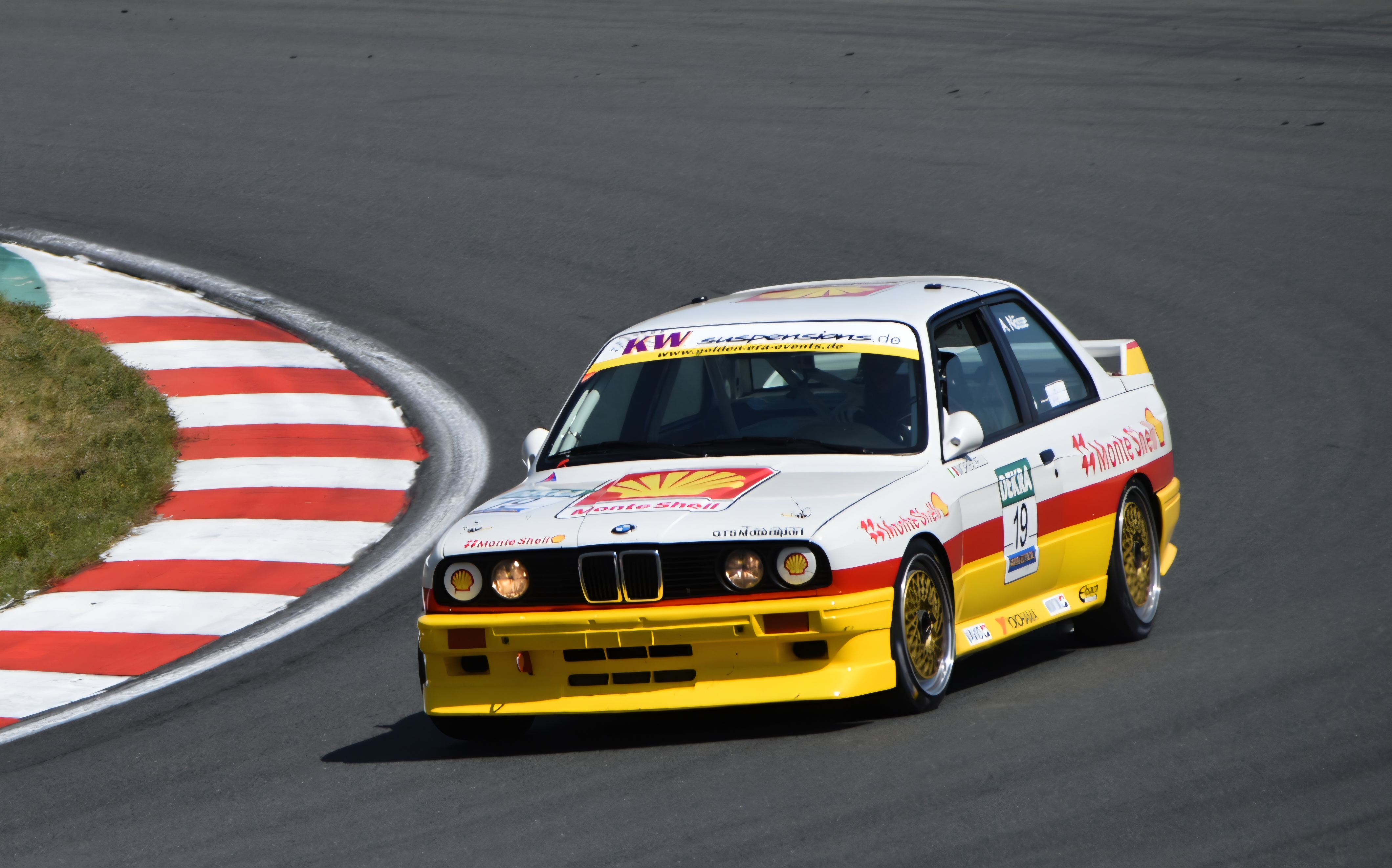
For a guy without a valid driving license, it might seem unfounded to be a motorsport enthusiast — traveling to circuits in remote areas just to quench my thirst for speed. This past weekend, I found myself at the DTM race at the Motorsport Arena Oschersleben, the northernmost permanent track in Germany. Spectators here sit high up on embankments about six to eight meters above the asphalt, giving you a perfect bird’s-eye view of the race action. From this elevated vantage point, nothing hits you harder than the monstrous roar of the engines. They roar more intensely than a thunderstorm cracking directly overhead — especially on the first lap when the cars run bumper-to-bumper, weaving through the corners like a giant, mechanical snake. The sound of the roar is not just something you hear; it is something you feel as pressure waves vibrate your chest cavity.
Motorsport is polarizing; you either love it or loathe it. It is definitely the former for me. My passion for motorsport was ignited at a tender age at a rally with my dad, and I guess following the sport is a way of remembering him. It’s a memory tied to the exhilaration of rallying — racing at speed in rugged, unforgiving terrain and threading cars through impossibly narrow gaps. But as I grew older, the aspect that intrigued me the most became the strategy. It gives smaller outfits a chance to outmanoeuvre mammoths to win. Take one of motorsport’s biggest upsets: the classic David-versus-Goliath story in 1983, where Lancia beat the industrial might of Audi.
I am an artist. The track is my canvas and my car is my brush — Graham Hill
Of course, this relentless pursuit of speed carries a heavy ecological and human toll. Flip over almost any motorsport ticket, and you will see the warning: “Motorsport is dangerous”. Yet, as a scientist, I find it fascinating that the race cars themselves act as high-speed research labs leading the way in sustainable fuel technologies. Right now, the entire DTM grid runs on 100% fossil-free synthetic fuel — proving we can enjoy the roaring engines we love while actively protecting the planet.
Motorsport fans share a level of rare, mutual respect often nonexistent in other sports, making the trackside experience completely unmatched. This exact sentiment was echoed by Chris — a gentleman I met in Hamburg’s Reeperbahn district during the World Cup finals. In football, opposing fanbases are strictly segregated, sometimes behind barricades for good measure. In motorsport, that tribalism simply doesn’t exist. McLaren fans decked out in bright papaya can banter with Ferrari Tifosi fans in deep red without any animosity. That said, I still would not trash-talk Max Verstappen while standing next to the Orange Army.
Next stop: Monza — the legendary “Temple of Speed.” This November, I am unexpectedly heading to Italy for the World Endurance Championship season finale. The trip comes down to a sudden calendar reshuffle, forced by the ongoing conflict in the Middle East. The chance to see the spaceship-like hypercars up close is a massive draw, but watching the iconic, V12-powered Aston Martin Valkyrie race down the historic Rettilineo pit straight will be a defining moment. And honestly? Swapping unreliable (never on time) German trains for a week of rich Italian car culture is the easiest decision I will ever make.